
How to Search for a Warrant in Turner County
Start with whatever paper you already hold. A citation, missed-court notice, bond paper, or case number usually names the court with the clearest answer. Georgia routes questions about a possible arrest warrant to the local sheriff, and the Turner County Sheriff can be reached at 229-567-2401. Before you call, have the full legal name and date of birth ready, plus a case or citation number if one exists.
- Identify the issuing court or agency from the paper.
- Call that clerk or Turner County Sheriff before traveling.
- Check the separate city court when the matter began in Ashburn or Sycamore.
- Use the sheriff Open Record Request form for a specific existing record.
- Confirm present status and resolution instructions with the issuing court.
The 219 East College Route
Turner County publishes its clerk and court contacts at 219 East College Street or Avenue in Ashburn. The Clerk of Superior Court keeps the criminal filings, and the county says that office files warrants and issues bench-warrant and bond-forfeiture notices. State Court and Magistrate Court are separate routes for their own cases. The official Magistrate Court service list shows how the local courts divide the work.
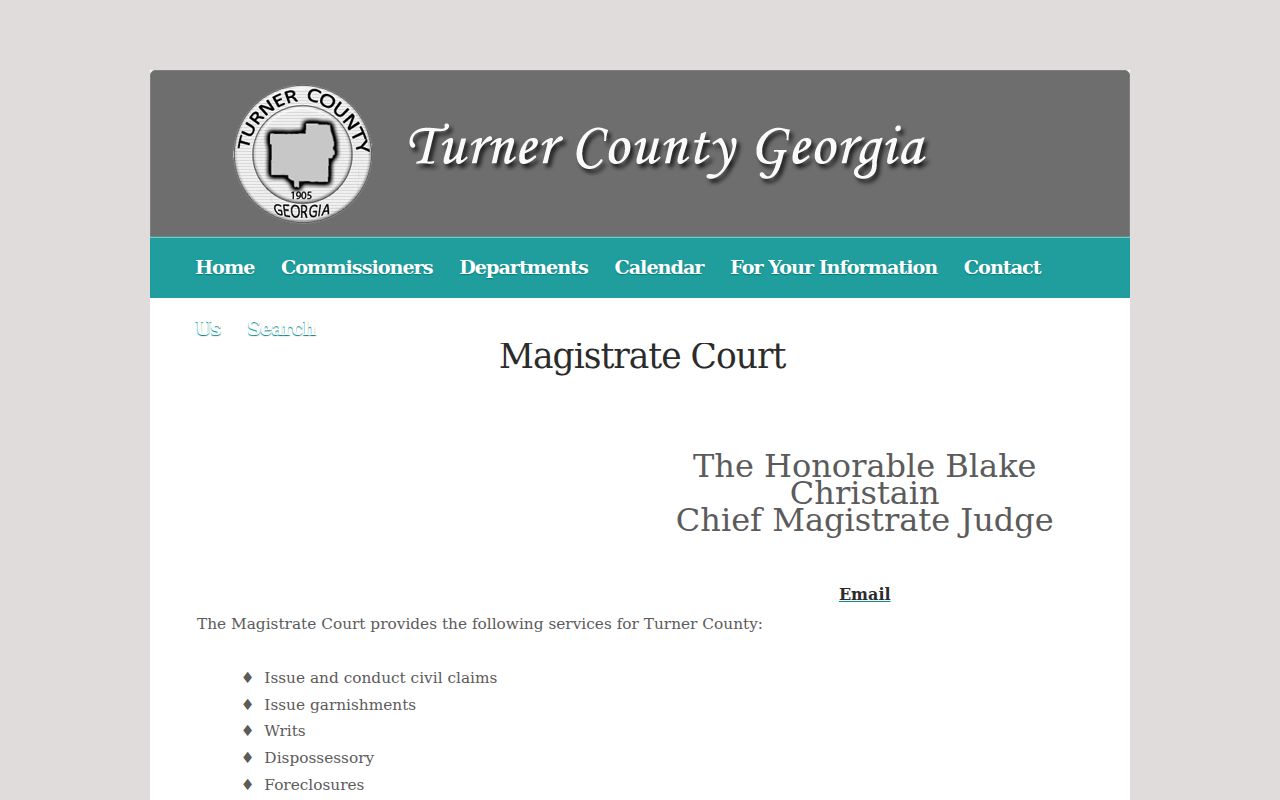
That Turner County page points you toward the right office. Only the clerk can confirm one specific record.
Call Turner Sheriff Before Visiting
The Turner County Sheriff's Office sits at 1301 Industrial Drive in Ashburn, listing 229-567-2401 and tcsheriff@turnercountyso.com. Its site offers contact and service routes but no searchable warrant roster and no direct warrant-unit line. Call first, and ask exactly what the office can verify before you visit.
A call comes first here, not a live warrant index. Georgia's official warrant guidance also points warrant questions to the local sheriff.
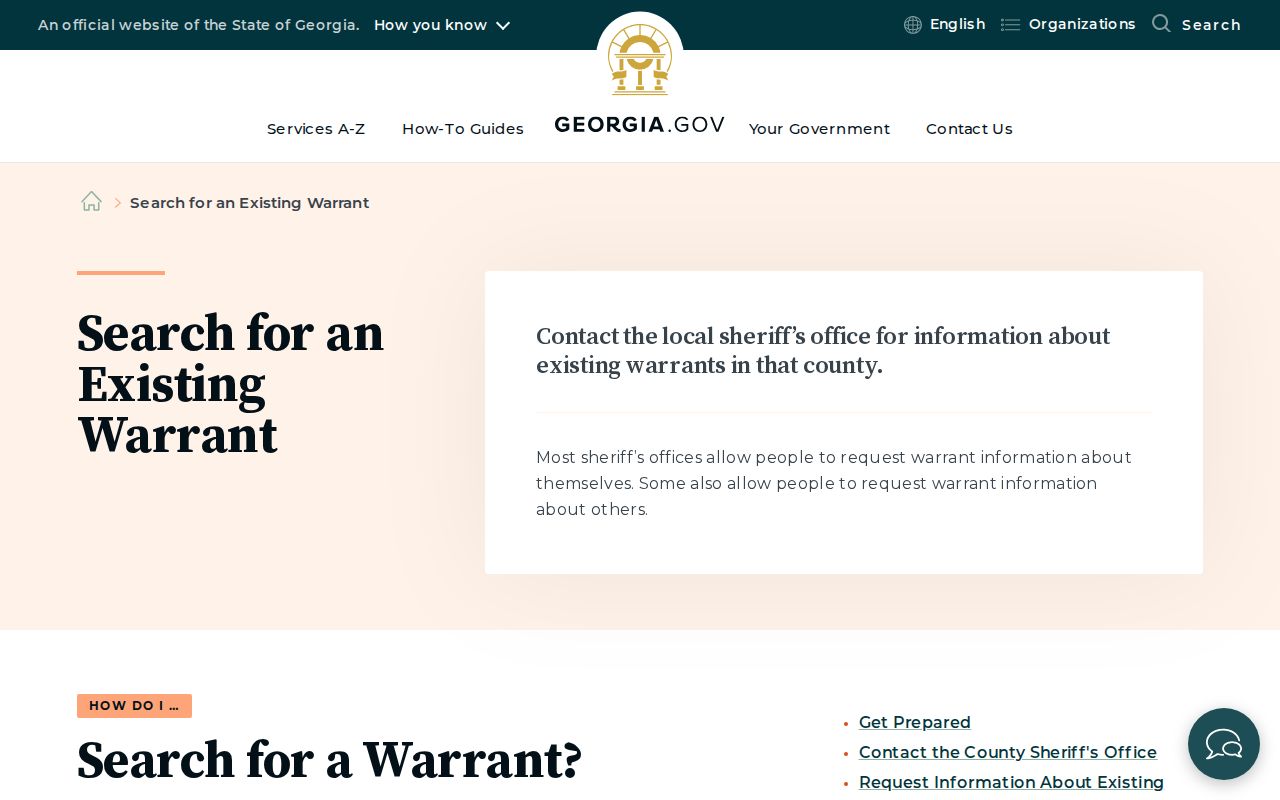
That state guidance backs the call-first route for Turner County. It also warns that an in-person inquiry could end in custody.
Important: Georgia warns that a person who appears in person with an active warrant may be taken into custody immediately.
Use the Turner Records Form
The sheriff's Open Record Request form asks for requester contact information, a detailed description, a date range, names or incident details, a delivery preference, and a certification for booking-photo requests. Ask for one specific existing file rather than a new countywide compilation. The office publishes no local copying fee. The sheriff services inventory lists records requests beside bond and citation services.
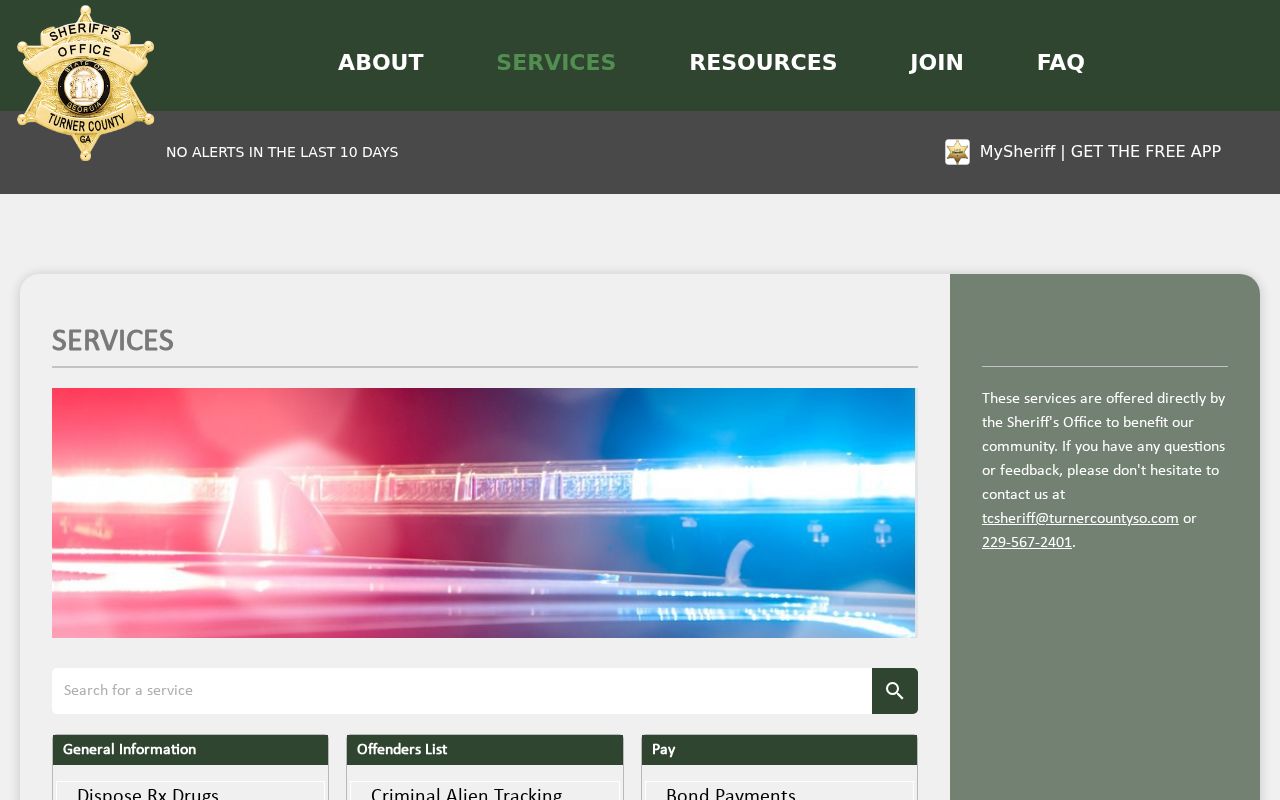
Use the form for copies. A direct call to Turner County works better for a live status question.
Turner County Warrant Search Fields
Turner County publishes no public warrant form, so no online tool exists to describe. The matching details come from Georgia's official warrant guidance and local papers. Share sensitive identifiers only with an official office.
| Full legal name | Starts an identity match; common names need another identifier. |
|---|---|
| Date of birth | Narrows a match and should be given only to the official agency. |
| Case or citation number | Routes a clerk to one file, such as court-issued ID. |
| Issuing court | Identifies the office that controls status and resolution. |
| Status question | Ask whether it is issued, open, served, recalled, quashed, or canceled. |
Citation Search Has Narrower Reach
The sheriff links to a current traffic-payment path, and EZCourtPay has displayed date-of-birth, citation-number, and last-name fields. Those fields can locate a citation for a participating court. Georgia Courts reports no centralized state traffic-citation database, and a payment screen cannot answer every warrant question. The current Turner citation handoff is the place to start.
Check that the named court is selectable, then ask it separately about failure-to-appear status. The linked EZCourtPay screen shows the citation-matching fields.
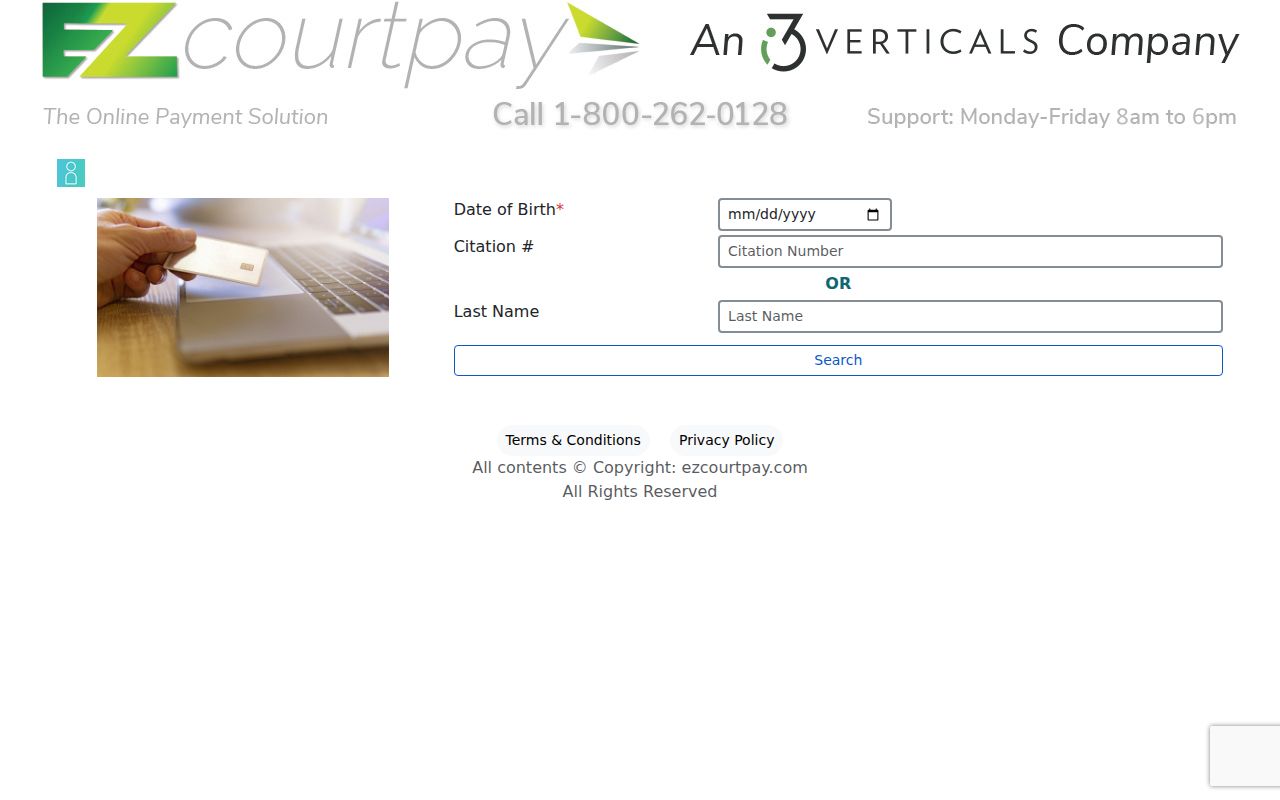
Those fields narrow a citation lookup in Turner County. They do not confirm countywide warrant status.
Where Turner County Warrants Are Checked
Superior Court in the Tifton Judicial Circuit handles Turner County felonies. Turner State Court takes misdemeanors and traffic cases, while Turner Magistrate Court handles lower criminal process. Ashburn Municipal Court and Sycamore City Court keep their own city matters. GCIC and NCIC serve law enforcement, not public warrant searches.
Key Point: A search is complete only after the likely issuing court and serving agency have been separated.
A citation portal, jail roster, DDS account, Felon Search result, or GCIC description is not a countywide warrant result.
What a Turner County Warrant Search Returns
An open-records response shows what a Turner County office holds and can release. It does not guarantee the status stayed unchanged after the response was prepared. A live inquiry asks whether the warrant remains open now, which court controls it, whether service or recall has been entered, and what the court requires next.
Access and Restricted Warrants
Georgia's Open Records Act favors access to existing public records, but costs, redaction, pending-investigation exceptions, sealed material, juvenile files, adoption files, and other limits may apply. An agency generally responds within three business days when it can produce records. It need not build a new list it does not keep, so frame any Turner County request around an existing file.
Important: A missing public record is not proof that no warrant exists, and a records response may not reflect live operational status.
Verify the Turner Court’s Next Step
Before anything else, pin down which court issued the Turner County warrant. One good call to the clerk covers four things. Does the clerk see a warrant entry at all? Which court and case identifier does it carry? Has a recall or later disposition been entered? And what step does the court allow next, whether that is personal appearance, counsel acting first, or bond and a DDS consequence handled separately? Staff in Turner County can explain filing and scheduling, but they cannot give legal advice, so get that advice before you walk in. Ashburn matters may start with Municipal Court or Public Safety. Sycamore lists a City Court number plus a separate Police Department contact. Rebecca posts no current municipal portal, so let the citation and a confirmed clerk contact guide that first call. Any county arrest-warrant question still routes to the Turner Sheriff. Federal records sit apart from all of this: PACER shows federal dockets, CourtListener is a third-party archive, and neither one replaces verification through Turner County. Georgia Felon Search covers convictions, not present warrant status.
Sources disagree sometimes, and the fix is simple. Note when each was checked and which agency created it. A jail roster shows present custody, not the whole unserved-warrant population. A citation portal shows a balance, not every later judicial action. A docket copy can be accurate as of its entry date while the Turner Sheriff holds newer service information. Do not stack these into a conclusion nobody supports. Name the originating court, ask for its current docket status, and confirm enforcement questions through the Turner Sheriff. Identifiers deserve the same care, since Turner County pages list the clerk as Mary L. Green or Mary Lee Green with legacy contact variants. Use the current clerk page, confirm by phone, and keep date of birth and other sensitive details inside the official call.
Traffic FTA Needs Two Checks
A traffic failure to appear in Turner County really involves two records. Ask the court whether an FTA notice went to DDS and whether a release was later transmitted. DDS counts 28 calendar days from receipt of notice before a suspension takes effect, but a license consequence and a court warrant are not the same thing. Resolve the citation with the Turner County court first. Then verify any court warrant separately. After that, follow DDS instructions for the license side. A payment receipt alone does not close every part of the case. Keep the court's release confirmation, and check DDS Online Services only after the court explains when its transmission was sent and processed.